Research

In an era where healthcare systems become the learning entities, routinely collected healthcare data such as electronic health records (EHR), insurance claims data, and registries open up new research opportunities but also come with unique challenges, which motivate my methodological research. Specifically, my research has two primary focuses:
  1. developing robust and efficient causal inference methods for comparative effectiveness and safety surveillance studies in the presence of unmeasured and mismeasured confounding, mediation, rare adverse outcomes with many confounders, and privacy concerns
  2. ​bridging statistics, computer science and biomedical informatics to promote data-driven healthcare leveraging multi-institutional EHR, in areas such as data quality control, data harmonization, and federated learning.​
AREA 01 / NEGATIVE CONTROLS & PROXIMAL INFERENCE

Negative controls & proximal inference
01
Illustration: Negative controls & proximal inference
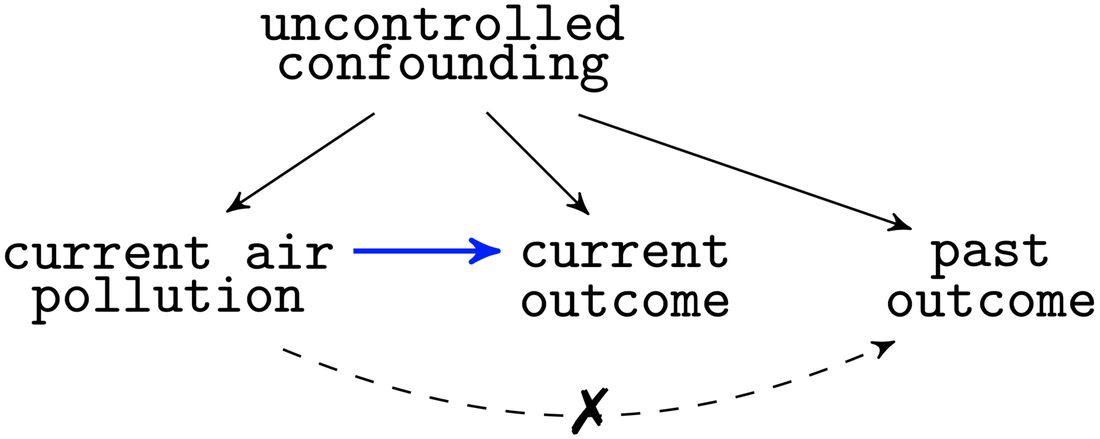
The future does not affect the past: past health outcome is a negative control in air pollution study
The negative control, defined as a factor known a priori to follow a null model, is a hidden treasure in causal inference to mitigate confounding bias. Biology experiments often leave out an essential ingredient to create a negative control to ensure that experimental results are valid. In observational studies, negative controls have been used to detect confounding bias. It turns out that one can go beyond bias detection and adjust for confounding bias with multiple negative controls. In Shi et. al. 2020, we develop multiply robust causal inference method to estimate the average treatment effect in the presence of unmeasured confounding leveraging a pair of negative controls. Our estimator exploits the full information in the data to achieve robustness to model misspecification. Negative controls hold promises for causal inference using EHR data as they are widely available due to the extensive medication history and longitudinal structure in EHRs. ​ 

Related work

AREA 02 / CLINICAL CONCEPT TRANSLATION

Clinical concept translation

02
Illustration: Clinical concept translation
Medical knowledge extraction and ICD code translation
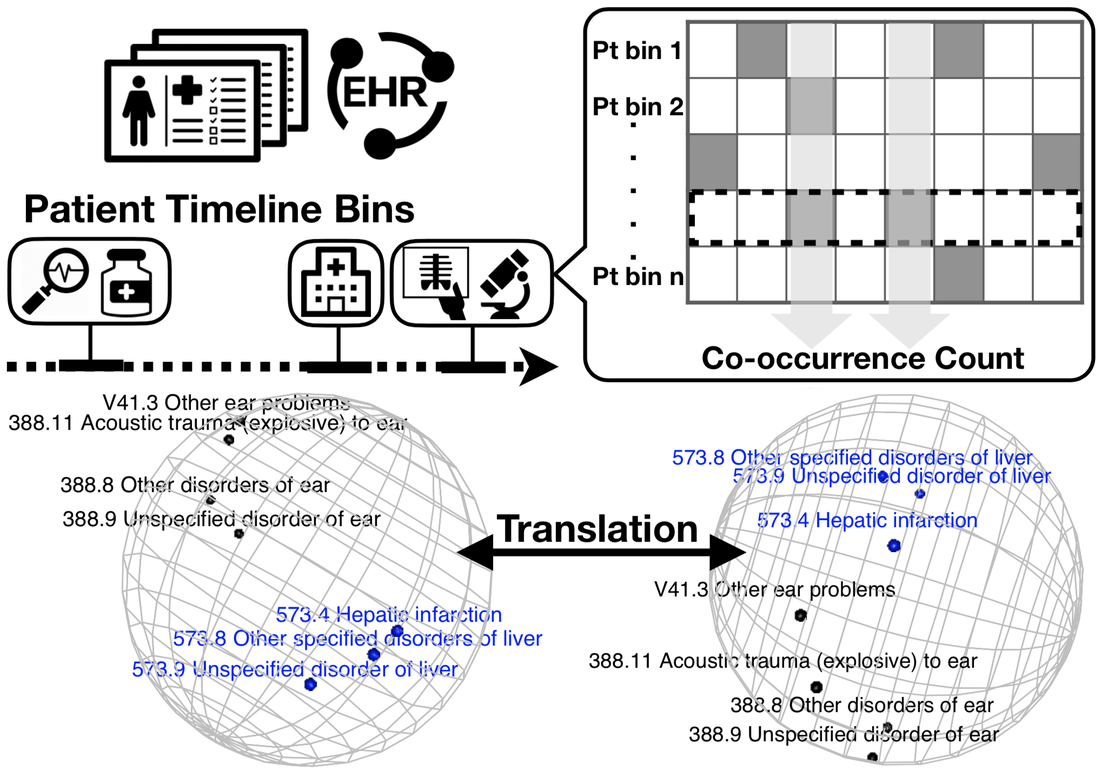
Due to the financial incentives and heterogeneity in healthcare systems, different providers may use alternative medical codes to record the same diagnosis or procedure. Inconsistent coding across EHR systems limits the transportability of statistical models.

​In Beam et. al. 2020, we generate semantic embedding vectors (SEV) of ICD-9 codes from their co-occurrence patterns in EHRs, using concept embedding algorithms such as word2vec. The directions of the data-driven SEVs encode their relationship and clinical meaning of the codes. Codes with similar concepts are closer to each other on the sphere, which allows translation of codes between systems.

Related work

In Shi et. al. 2020, we turn the code translation problem into a statistical problem of relating two sets of unit-length SEVs trained from two respective healthcare systems. The statistical problem is particularly interesting because the training data is corrupted by a fraction of mismatch in the response-predictor pairs, whereas classical regression analysis tacitly assumes that the response and predictor are correctly linked. We propose the iterative spherical regression mapping method to link the two sets of SEVs, which outperforms conventional machine translation method. We establish theoretical guarantees for estimation and model selection consistency. Our theoretical findings shed light on recent effort in record linkage and common data model for EHR data as we illustrate how estimation error depends on linkage error and how one could correct the mismatch leveraging group information.
AREA 03 / SAFETY SURVEILLANCE

Safety surveillance

03
Illustration: Safety surveillance
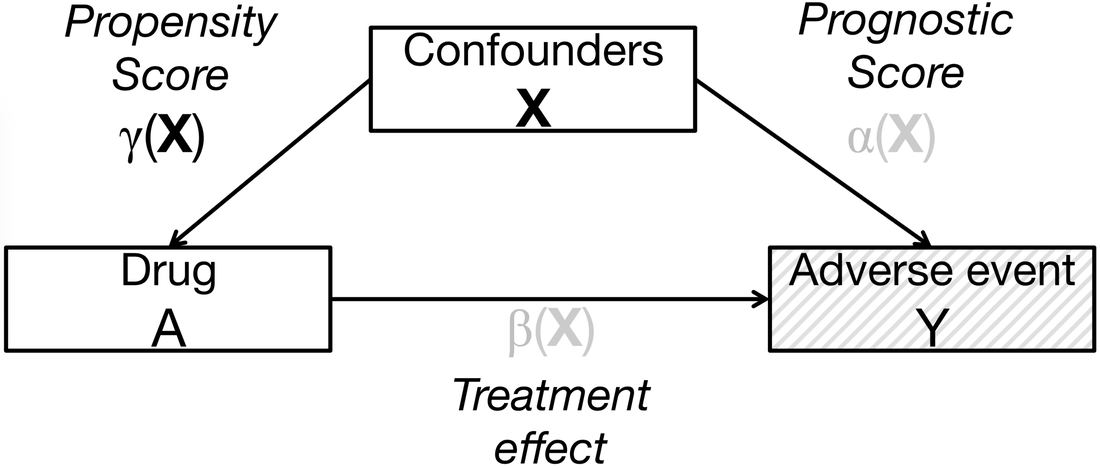
Rare adverse event and high-dimensional covariates necessitates flexible propensity score methods
Clinical trials are often too small to systematically detect rare events and may not be generalizable to the population who will ultimately receive the medical products. In contrast, large-scale observational healthcare databases provide rich patient information from a broad population in the real world, facilitating the evaluation of factors associated with both individual benefit and potential harm. For example, the FDA created the Sentinel Initiative, a surveillance network with over 100 million patient lives to monitor the safety of its regulated medical products using EHR databases from numerous data partners across the US. However, in safety surveillance study, the adverse event is often extremely rare. In contrast, given sufficient uptake of the exposure and comparator medication, propensity score methods can provide both sufficient control of confounding and dimension reduction. In Shi et. al. 2020, we characterize a flexible regression on the estimated propensity score method with a computationally efficient variance estimator to infer the causal effect in a select population.

Related work

AREA 04 / HARMONIZING EHR UTILIZATION

Harmonizing EHR utilization

04
Illustration: Harmonizing EHR utilization
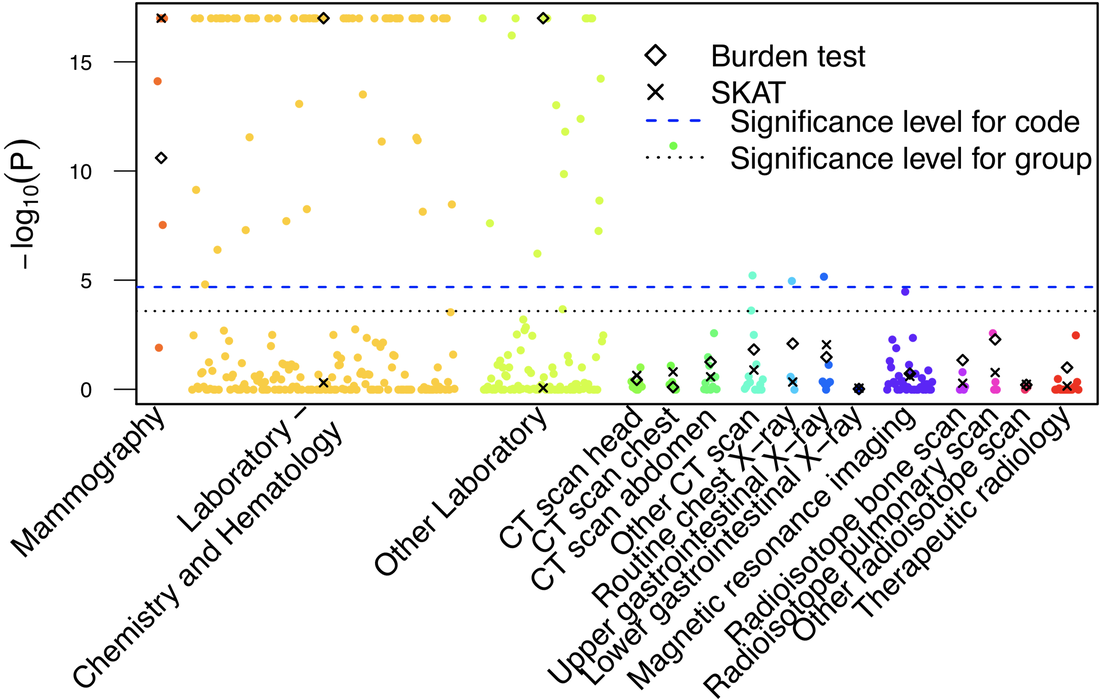
Coding differences and differential healthcare utilization patterns between Henry Ford Health System and Kaiser Permanente
Recent federal initiatives are moving from the adoption and collection towards the linkage and integration of EHRs across clinics, hospitals, and healthcare systems. A key challenge to the use of electronically assembled cohorts is the potential for variation in both  the choice of specific procedures and coding practices in different healthcare systems and across time. In Shi et. al. 2017, we scan the full spectrum of medical procedure codes to detect differential healthcare utilization patterns and identify data quality issues. Hierarchical structure in terms of medical code grouping and provider-level clustering adds unique complexity to the analysis of EHR data. We adapt groupwise genetic association tests and develop inference method for adaptive shrinkage accounting for potential correlation driven by provider behavior. We ultimately provide interpretable dynamic graphical tools implemented in an interactive web application, which were used to assess the effect of early imaging on downstream healthcare utilization among the elderly with back pain in Jarvik et. al. 2015.

Related work

AREA 05 / COMPARATIVE EFFECTIVENESS

Comparative effectiveness

05
Illustration: Comparative effectiveness
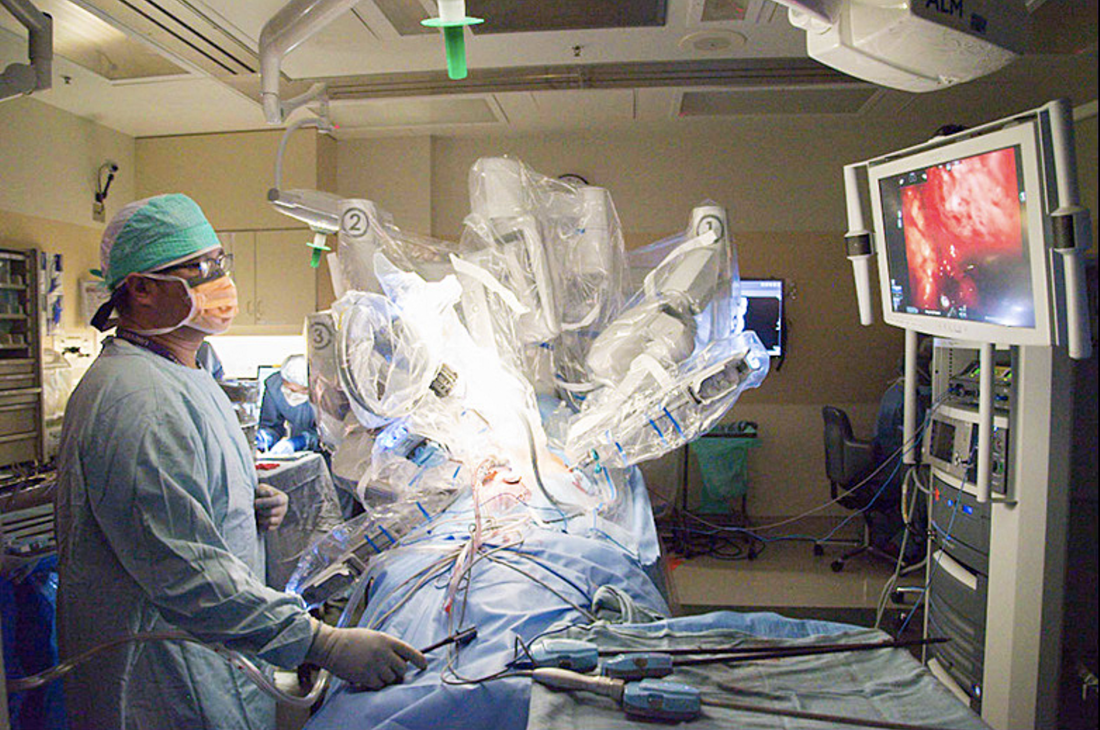
The Seattle Times: "Minimally invasive surgery a safe option for major liver cases, UW study finds", by JoNel Aleccia
I collaborate with researchers in surgery on multi-site comparative effectiveness studies. For example, in Thornblade et al. 2017a, a retrospective study of patients undergoing hepatectomies at 67 hospitals was conducted to assess the comparative effectiveness between minimally invasive surgery (such as laparoscopy and robotic surgery) and conventional open surgery. This is the largest multi-institution study in this field, and we demonstrated that minimally invasive surgery is a safe option for major liver operations. Our finding was featured in the Seattle Times. ​Thornblade et al. 2017b is a prospective study of patients undergoing colorectal surgery in Washington State looking at association between immunonutrition prior to elective colorectal surgery and serious adverse events. Because of differences in surgeon and hospital practices, there was concern for variation across hospitals in both the receipt of immunonutrition and the outcomes. To account for unmeasured differences, I proposed to perform matching within hospital and found that immunonutrition was associated with decreased postoperative length of stay.

Related work